The Spiritual Roots of Baltasar Gracián’s Wisdom
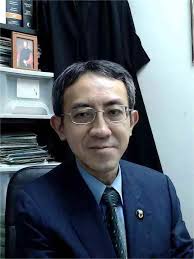
29 april 2026 | Prof. dr. h.c. Hei Sing Tso

Baltasar Cracian’s book, “The Art of Worldly Wisdom” is widely read and praised all over the world. Many people compare it to Machiavilli’s “The Prince” and Sun Tsu’s “The Art of War”. Most think that this is a wisdom manual for secular success in career, politics and business. This is totally misconceived. Garcian was a Catholic Jesuit and philosopher. Faith and theology are at the centre of his inner world. On the other hand, Jesuits are different from other Catholic Orders. They aim to engage with the secular world. Educated in Thomisic and Aristotolean ethics, it was logical for Gracian to bridge worldliness and the divine. His ethics are known as the philosophy of ingenium, while the virtue of prudence is a form of ingenium. Through the practice of prudence in worldly affairs, one can attain salvation after death. Prudence is a channel linking the world and the divine. Hence, my view is that the English title for the book is misleading. The original Spanish title of the book is “Oraculo Manual y Art de Prudencia”. Prudencia is the virtue of prudence. Gracian aims to encourage people to practise prudence in the world for achieving access to the divine by reading this little manual in daily life. This is a spiritual action treatise, not a self-help book for worldly success in the common understanding of the term.
Although the book consists of short maxims, one should read these between the lines with contemplation. We can use the Chinese wisdom approach of “微言大义” (trivial words with great ideas) in reading Gracian’s book, finding out hidden and deeper wisdom for life in parallel with spirituality
The First Maxim
Everthing is at its peak of perfection. This is especially true of the art of making one’s way in the world. There is more required nowadays to make a single wise person than formerly to make the Seven Sages of ancient Greece, and more is needed nowadays to deal with a single person than was required with a whole people in former times.
The first maxim is essential. This lays the foundation and the core idea of prudence in practice. Gracian thinks that every person can be on the path to perfection to access God, and this way is through practice in the secular world, not in desserts or monasteries. To be wise and to access perfection, a secular person needs to practise his inner mind as did the sages in ancient Greece. However, this is more difficult in the secular world, as he is easily subject to evil temptations. The last sentence has political implications. Firstly, a prudent statesman can lead a nation to win any war even if the enemy has more resources. Secondly, if the leader of your enemy lacks prudence, others can take this weakness as a strategic opportunity.
The Second Maxim
Character and intellect. These are the two poles of our capacity: one without the other is but halfway to happiness. Intellect is not enough, character is also needed. On the other hand, it is the fool’s misfortune to fail in obtaining the position, employment, neighbour and circle of friends of his choice.
This is the first wisdom to build up a capacity for prudence. Most people value intellect highly, as this can be objectively tested and evaluated. We attended the same lessons and got a similar MBA. However, Gracian taught us to know our character first. God makes each person unique. Sun Tsu said “you will win every time when you know yourself and your enemy fully!” Further, character should match close surroundings because employment, neighbours and circles of friends are your personal strategic assets. The more you know your character, the more prudent you are.
The Third Maxim
Keep matter for a time in suspense. Admiration at their novelty heightens the value of your achievements. It is both useless and insipid to play with your cards on the table. If you do not declare yourself immediately, you arouse expectation, especially when the importance of your position make you the objects of general attention. Mix a little mystery with everything with everything and the very mystery arouses venerations. And when you explain, do not be to explicit, just as you do not expose your inmost thoughts in ordinary conversation. Cautious silence is the sacred sanctuary of worldly wisdom. A resolution declared is never highly though of-it only leaves room for criticism. And if it happens to fail, you are doubly unfortunate. Besides, you imitate the divine way when you inspire people to wonder and watch.
God is mysterious and we should learn from God. According to Lao Tzu, we should keep quiet and silence to follow the Tao. Likewise, Gracian told us to close our mouths in an open setting for two strategic aims. One is to arouse expectations among supporters and another is to avoid attacks from enemies. The last sentence clearly taught us to imitate God to make wonders and inspirations. These are also essential for public engagement and even in election campaigns.
The Fourth Maxim
Knowledge and courage. These are the elements of greatness. Because they are immortal they bestow immorality. Each is as much as he knows, and the wise can do anything. A person without knowledge is in a world without light. Wisdom and strength are the eyes and hands. Knowledge without courage is sterile.
When one makes prudent decisions, knowledge is necessary. However, not all knowledge is good. We should only acquire knowledge that sheds divine light for immortality and salvation. As a virtue, we need to use good knowledge with courage and persistence even when facing difficulty, denial and criticism. Education and ideology always forbid us to learn fringe knowledge. To Gracian, people will be wise when they have broad knowledge. Directed by divine wisdom, one can even apply this fringe knowledge to create effective strategies.
The Fifth Maxim
Make people depend on you. It is not he that adorns but he that adores that makes a divinity. The wise person would rather see others needing him than thanking him. To keep them on the threshold of hope is diplomatic, to trust to their gratitude is boorish; hope has a good memory, gratitude a bad one. More is to be got from dependence than from courtesy. He that has satisfied his thirst turns his back on the well, and the orange squeezed falls from the gold platter into the waste basket. When dependence disappears good behaviour goes with it, as well as respect. Let it be one of the chief lessons of experience to keep hope alive without entirely satisfying it, by preserving it to make oneself always needed, even by a patron on the throne. But do not carry silence to excess or you will go wrong, not let another’s failing grow incurable for the sake of your own advantage.
God gives us hope. Hope is a virtue. If there is no hope, the relationship will not last long. In human affairs, hope is linked to a variety of dependence: physical, financial, political and even emotional. Gracian taught us to use dependence skilfully. As mentioned in the fourth maxim, keeping silence can sometimes boost dependence as others may make mistakes and come back to you for help. You can be a mysterious mentor for influence and power over that person. However, one should note the last sentence. To be prudent, your silence should not be excess and your interests should not lead to other’s sin. Otherwise, you will not have salvation.
According to Gracian, stratagems do not only concern the secular world. When reading these maxims with a spiritual lens, true wisdom for life will be revealed. I hope to share more spiritual treasure of Gracian’s maxims with readers in the future.